

Foreign Policy | 17 February 2021
By Parag Khanna and Spencer Wells
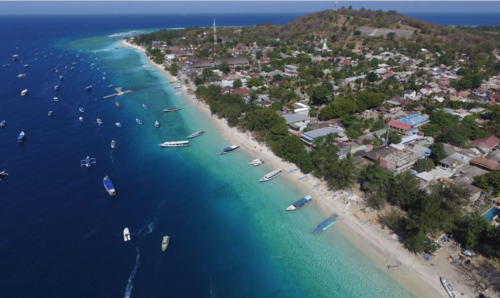
In this column for Foreign Policy, Parag Khanna and Spencer Wells argue that paranoid island states have done the best when it comes to fighting COVID-19.

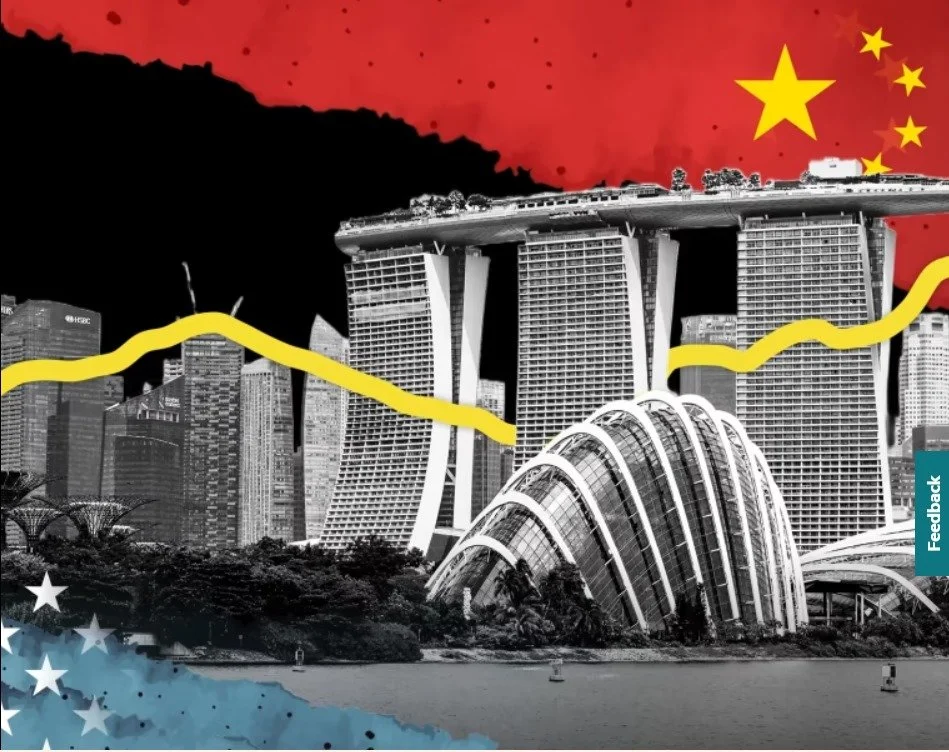
Financial Times | 11 September 2023
“The money is pouring in,” says Parag Khanna, founder and managing partner of FutureMap, a global strategic advisory firm. Investors want somewhere “genuinely open, home to everyone and that isn’t dominated by one power. Hong Kong has long since ceased to be that pan-Asian hub.”
The Washington Post | 17 November 2021
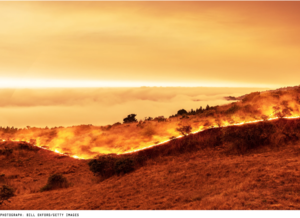
The country must realistically assess which geographies are becoming unlivable and which are well suited to larger population settlement. It should then offer incentives for migration toward the latter and away from the former — and direct infrastructure spending accordingly.
Scientific American | 14 October 2021
As climate change accelerates, America may be divided into liveable and unliveable zones, argue Susan Hassol and Parag Khanna in this essay for Scientific American.
Future by a16z | 13 October 2021
The passport of the future should be a global app based on skills and health rather than nationality. To get there, we'll new protocols for travel and migration based on blockchain technologies and biometrics.
Foreign Policy | 17 February 2021
By Parag Khanna and Spencer Wells
In this column for Foreign Policy, Parag Khanna and Spencer Wells argue that paranoid island states have done the best when it comes to fighting COVID-19.
Fast Company | 11 February 2021
By Parag Khanna
In this featured column for Fast Company, Dr. Parag Khanna argues that it's time for a radical redesign of America's executive branch, as well as to stop confusing meritocracy with technocracy.
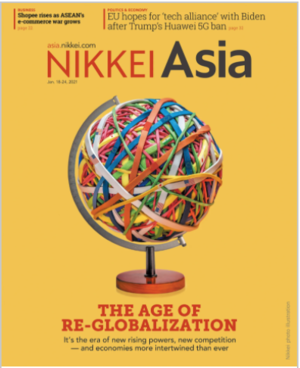
Nikkei Asia | 15 January 2021
By Parag Khanna
In this cover essay for Nikkei Asia, Dr. Parag Khanna argues that the future of globalization will be driven by Asia and new inter-regional patterns of trade and finance are emerging. Don't worry about globalization — make sure you have a place in it.
Noēma | 23 December 2020
By Parag Khanna
In the third instalment of this essay series on US-China relations for Noēma, Dr. Parag Khanna explains that no grand strategy can succeed in the 21st century without incorporating an element of global strategy.
Hoover Institution | 12 December 2020
By Afshin Molavi
From Rabat to Riyadh, US allies (and adversaries) across the Middle East and North Africa (MENA) region have witnessed rapid growth in economic, commercial, and diplomatic ties with China.
Rest of World | 7 December 2020
By Scott Malcomson
The internet was always supposed to take over the world. No industry had ever gone from zero to global in such a short period of time. The ascent of tech helped give new meaning to the verb scale: “to grow immense, as quickly as possible.”
WIRED | 21 September 2020
By Parag Khanna and Michael Ferrari
Parag Khanna and Michael Ferrari argue that altering Earth’s geophysical environment is a moon shot, yet it will be the only way to meaningfully slow global warming.
Project Syndicate | 8 July 2020
By Michael Ferrari, Parag Khanna, Spencer Wells
The arrival of summer in the Northern Hemisphere has brought a flurry of speculation that warmer and wetter weather will hold down the COVID-19 infection rate. But even if the hoped-for relationship between transmission and warm weather is valid, it may not be causal or straightforward, especially given seasonal behavior.
Astana International Financial Centre | July 2020
FutureMap was pleased to collaborate with the Astana International Financial Centre (AIFC) to prepare its 5th Annual Report that highlights Kazakhstan's next wave of economic reforms and investment opportunities.
DOWNLOAD PDF (ENGLISH) →
DOWNLOAD PDF (RUSSIAN) →
DOWNLOAD PDF (KAZAKH) →
Politico | 13 May 2020
By Parag Khanna and Kailash K. Prasad
The tide of migration is a force as intrinsic to human nature as climate change is to the planet. And right now, like passengers clamoring to get off the cruise ships stranded at sea, mankind more than ever is itching to move out of dangerous areas.
Foreign Affairs | 14 November 2019
By Scott Malcomson
In late October, Germany and China began commercial-scale rollouts of 5G, the wireless technology infrastructure that is transforming the way the world computes. Machines and people will still talk to each other over the borderless network we call the Internet. But with 5G, a new networking infrastructure is emerging, dependent on the Internet but distinct from it and subject to much more government and private control.